
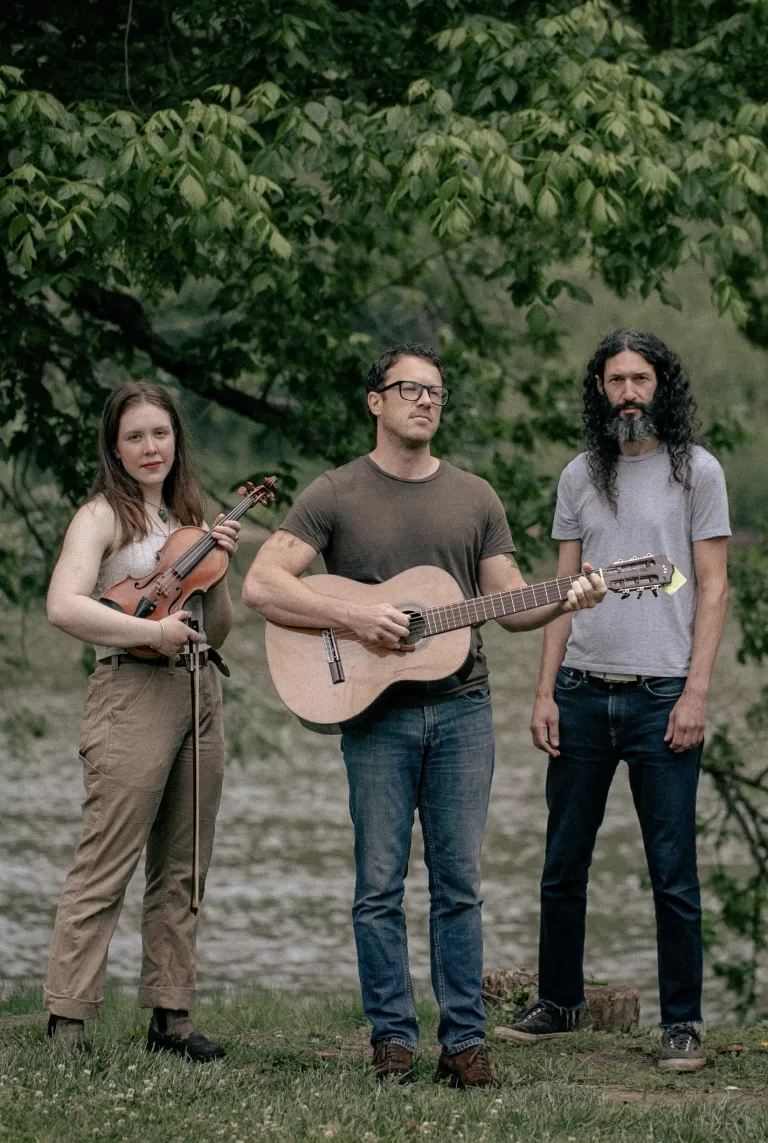

Mt. Kili make the kind of folk music that does not ask for your attention so much as quietly takes possession of it. The songs on their latest release, ‘The Noticer‘, arrive already breathing, already inhabited, as if you have walked in halfway through something intimate and slightly confidential. There is nothing showy about the way they do it, which is exactly why it works: the record does not lunge for meaning; it lets meaning gather naturally, one note at a time. By the time you realise how much the songs have got under your skin, they are already there, working away at the back of your mind.
That quiet hold is a big part of why Mt. Kili feel so convincing. They are not chasing grand gestures or dramatic reinvention, and that restraint suits them. Instead, they let the songs unfold with patient confidence, keeping everything human-sized, detailed, and emotionally direct. The result is music that earns its weight rather than announcing it.
The project began with singer-songwriter Rick Sichta, and from the outset, it carried a distinct emotional grain. Those early home recordings, built from deeply personal songs, already suggested a band with its own shape. For me, though, the sound has only grown more compelling as it has opened out into something more collaborative, with the added musicians giving the songs more lift, more colour, and more room to breathe.
That origin also explains the way the band think about scale. The name Mt. Kili points to travel, distance, and perspective, drawn from Sichta’s time backpacking through China and Tibet and his trek toward Mt. Everest, with Mt. Kilimanjaro also part of the project’s imaginative horizon. There is something useful in that contrast: the songs feel close enough to touch, yet the name keeps tugging the eye outward. That push and pull is one of the reasons the music feels so distinct.
What Mt. Kili have done particularly well is turn that intimate core into a real band language. The Noticer does not sound like a solo writer with a few players filling in the blanks. It sounds like a group listening closely to one another. Matt Shepard’s drumming gives the songs a pulse that is never heavy-handed, but always alive, while Laney Barnett’s violin adds a thread of tension and lift that changes the shape of the arrangements without ever crowding them. Nothing feels decorative. Every part sounds like it belongs there because the song has made room for it.

That is what makes the arrangements so satisfying. They are restrained, but never thin. There is plenty happening, just not in ways that announce themselves loudly. Percussion adds small bursts of motion and friction. The violin can hover like a memory or cut through like a second thought. Guitars hold the centre, but they are not left to carry the whole emotional load. Everything is there in service of the song, and that discipline gives the album its calm strength. It is the sound of musicians who understand that a detail can land harder than a flourish.
Sichta’s vocal style sits perfectly inside that approach. He sings with a plainspoken, unforced intimacy that keeps the songs from tipping into sentimentality. There is no strain in the performance, which somehow makes it more affecting. He sounds like someone telling the truth carefully. I hear a Frightened Rabbit connection there, though more as a matter of emotional method than strict likeness: both acts understand how to make directness feel disarming, how to let a lyric carry both ache and plainspoken truth. Mt. Kili, though, are less frayed and less bleak, and that contrast matters. If Frightened Rabbit often felt like they were singing from inside the storm, Mt. Kili feel closer to the calm after it. For a different reference point, I also hear a little José González in the way they trust restraint to carry feeling, and in how a small arrangement can still feel emotionally complete.
That balance between ache and warmth is central to the band’s identity. Mt. Kili work in the broad territory of freak folk, indie folk, and folk rock, but those labels only tell part of the story. What really defines them is the feeling that the songs are being lived rather than performed. There is an openness in the writing and a gentleness in the delivery that make the music feel welcoming without becoming vague. They are not trying to baffle anyone; they are trying to communicate.
The production of ‘The Noticer‘ helps preserve that feeling. Recorded at Echo Mountain Studio in Asheville and mastered with obvious care, the album has a polished clarity without losing the grain that makes it feel alive. You can hear the space around the instruments, which matters because the record depends on nuance. If the sound were too glossy, the details would flatten. If it were too rough, the subtleties would blur. Instead, the album lands in that difficult middle ground where every gesture feels both considered and spontaneous.
As an introduction to the band, ‘The Noticer‘ is especially effective because it captures Mt. Kili at the point where their identity feels most complete. The album is anchored in Sichta’s writing, but it is no longer the story of one voice alone. It is a band record in the truest sense: shaped by interplay, trust, and a shared understanding of how much feeling can be carried by a small arrangement when the players are listening closely enough. That is a very specific skill, and Mt. Kili have clearly spent time learning it.
What makes them worth introducing now is not just that they are good at this kind of intimate folk. It is that they understand its possibilities. They know how to make a song feel private without making it inaccessible. They know how to let a violin line change the emotional weather of a track. Most importantly, they know how to make sincerity sound like a strength rather than a default setting. That is not easy, and it is one of the reasons the project stands out.
‘The Noticer‘ works because it lets Mt. Kili be exactly what they are: a band that understands how to make tenderness feel sturdy, and still leave a little dust on the boots. It is a record that opens the door without kicking it in, and that feels about right for a group whose best trick is making the small stuff linger.
TRACKS:
