
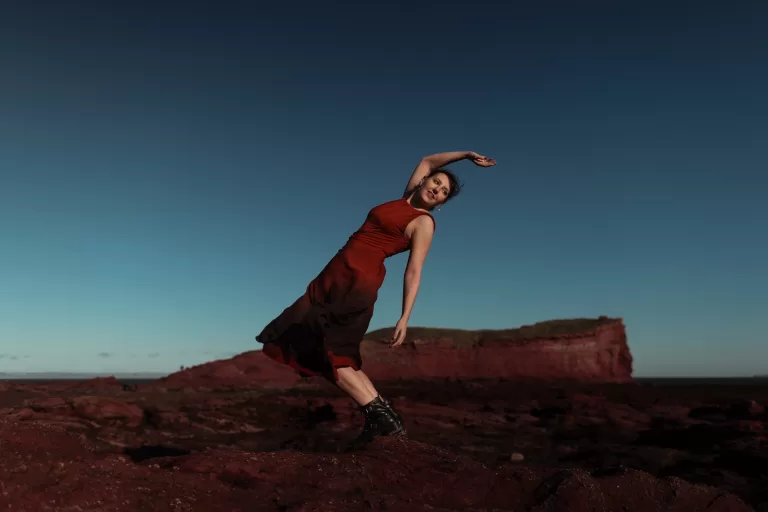

Edinburgh musician Emma Miller’s album, “I Want To Be The Anchor” encompasses the feeling of sitting in a boat and drifting away into the fog to find yourself. Anchoring all of this is Miller’s clear, warm voice which carries subtle Celtic lilts, and you can never get enough of it. In a bold move, she released only half the record online; the rest exists solely in physical copies. All of the eleven songs on “I Want To Be The Anchor” carry the overarching theme of the transition, the feeling of being lost and the ache for stability.
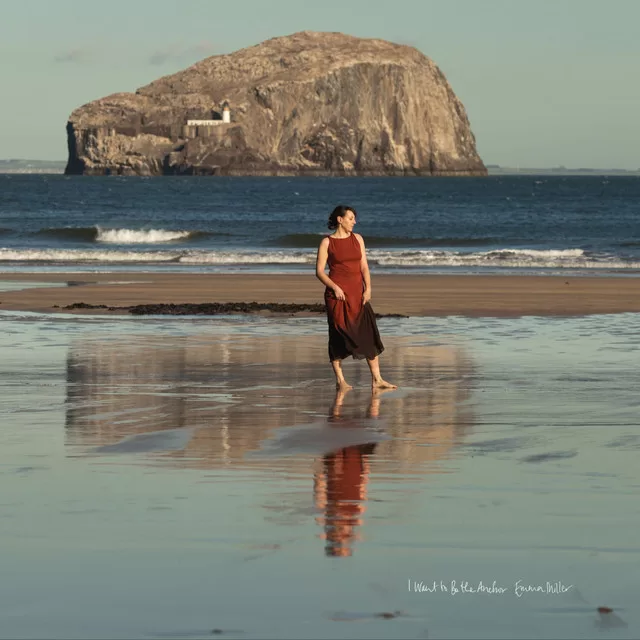
The album opens with “Siren”, pairing a piano melody with shimmering strings. Miller’s vocals are ethereal, evoking Greek mythological figures, though the title actually refers to an alarm siren calling for peace when the world gets too loud. It shifts right into “Sinking”, a personal favourite of mine. The slow, dragging piano keys feel physically heavy and Miller’s lower register captures the exhaustion of holding it together. It switches up towards the end when her vocals soar into a higher register, complemented by bright, tinkling guitar licks.
“Late September” is soaked with nostalgic autumn vibes and warm, rich vocal tones. The soothing guitar strums complement the song’s theme about aging and transition. It perfectly sets up the title track “I Want To Be The Anchor”. Recorded live with a live piano and string quartet in a single take, it beautifully showcases her vulnerability, driving home the album’s theme about stability.
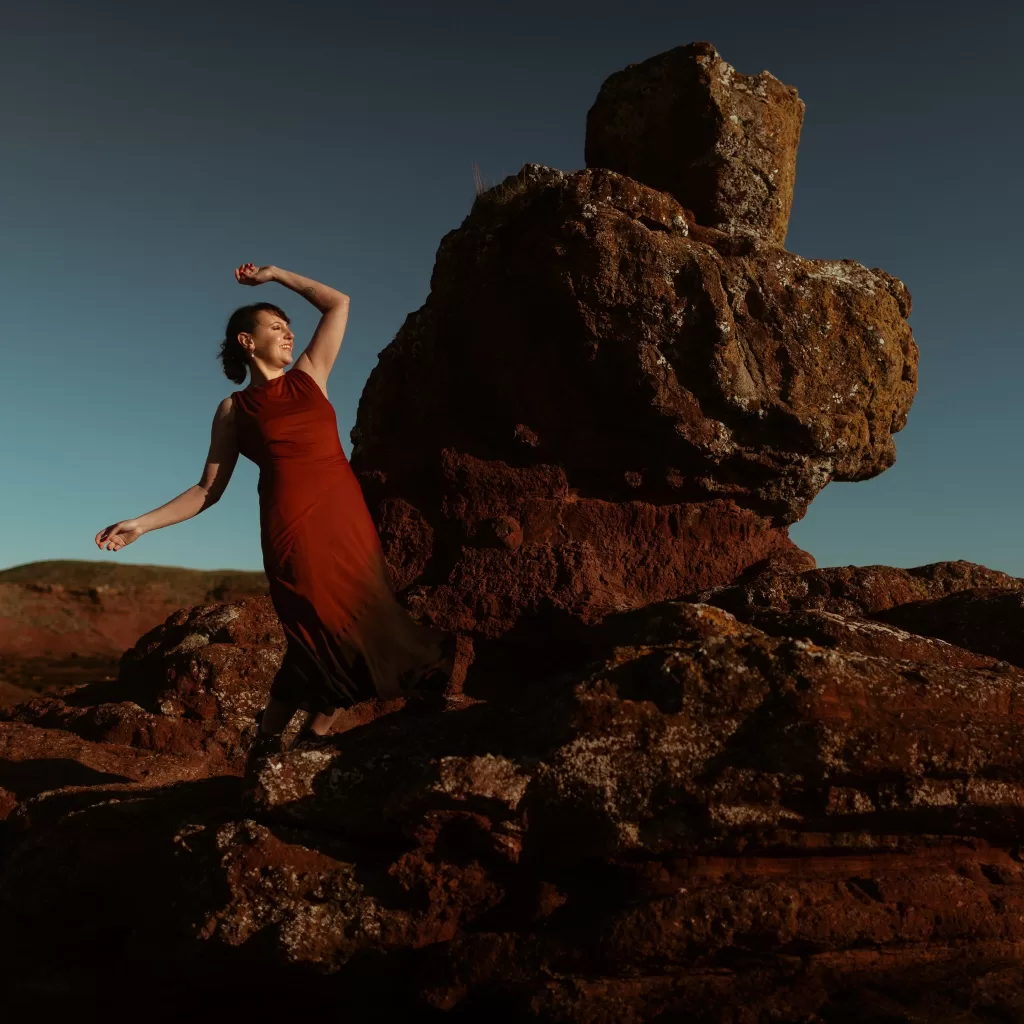
The album ponders the big questions but leaves them open ended, acknowledging that finding stability is a lifelong, vulnerable process. Turns out, you never needed to go into the fog to find yourself; sometimes you just need to drop the anchor.
We recently caught up with Emma Miller to get an insight into her mind and music.
Cougar Microbes: Let’s talk about the album. It was a bold move only keeping half of it up on streaming sites. What made you decide to put the other half in physical copies?
I’m very proud of the fact that I reserved half the record for direct purchase. There was a multitude of reasons behind that – one of which was my desire to protect my work from the AI machine that now populates all streaming platforms. Indie artists in particular, seem to be the targets of blatant plagiarism from AI companies – presumably because we don’t have the financial or legal resources to fight our cases. Withholding half the album was my compromise – giving the chance to new fans to find my music and discover the project, but guarding a significant chunk from the tech bros. Another motivation was the deep desire to cultivate a closer connection with how people listen to my music. This album was a labour of love, a once in a lifetime experience for me and I wanted to present it as a whole project. Fans who go the extra mile to buy the vinyl, CD or direct download are rewarded with an entire world, something that encapsulates a significant part of my life over the course of 11 songs. It’s been wonderfully rewarding to post out records to folk across the world who are choosing to listen in this ‘old school’ long format way.
CM: Was there a process to deciding which songs “made the cut” to streaming sites vs. physical only copies?
To a certain extent, yes, there was. I’m really happy with the flow of the album and how it divides on the likes of sides A and B. Songs like ‘I Want to Be the Anchor’ captured so much of the magic of the studio and a level of honesty that it had to be publicly available in order to establish the narrative of the album. Overall, the division came down more to the balance of the listening experience – allowing moments of light and darkness to come through at the right times. Equally, the closing track ‘Always’ feels like another vulnerable song that I’m happy to reserve for closed listening.
CM: Now personally, “Sinking” is my favourite song from the album. Can you tell me more about the song and about the musical choices made in creating this song?
I’m so happy you love Sinking – it was one of my favourite days in the studio. The song itself started off many years ago as an a cappella idea I recorded in a friend’s flat in Nashville. It was a track I delved in and out of over the years, finally feeling the urge to take it away from the initial pessimistic tone in the demo and embrace a more cathartic theme of growth and self discovery and the benefits of being a ‘late bloomer’.
In the studio in Tennessee, working with drummer Derrek Philips and bassist Clark Singleton opened my eyes to how creative the collaboration could be. Clark was asking me questions like ‘are we in the woods for this song?’ ‘What are we wearing?’ ‘Is ‘Hejira Joni’ close to the world we’re living in?’. All fantastic questions that got us speaking the same language and on the same page. The intro of the track was just a moment of the guys (including producer Nick Bullock) jamming before a take – I loved the ominous tone and tension so much that I suggested capturing it for the song. The production came together in a matter of a few takes and is one of my favourites from the album.
CM: I noticed the water imagery throughout the album like “anchor”, “siren”, “sinking”. Was this intentionally done from the start or something you noticed as the album came together?
Honestly, I hadn’t joined the dots on that at all. There isn’t too much reference to water in the songwriting, but you’re right – the titles and artwork must be subliminally channeling an inner water theme I have. If I reflect on it, there is a sense of cleansing and redemption in a lot of the songs – water certainly holds that power for me. I come from a coastal area and in my most overwhelmed moments, water is where I tend to return to – whether it’s a cold water dip or a swim at the Commonwealth pool in Edinburgh, it’s certainly a cleansing and restorative force for me.
CM: I read somewhere that the title track was recorded live and written just a day before the recording. Can you walk me through the creation and conception of the song?
A couple of weeks before arriving in the States I had a bit of a personal epiphany which radically shifted many things in my life. I sat down at my piano in Edinburgh and wrote most of the song in one go. It was emotional and cathartic and frighteningly honest and far too raw to possibly consider for the album at that stage. Plus, I thought I’d already written the record and there wasn’t really an opening for a brand new, last minute entry. Whilst at the studio, I found myself returning to the song late in the evening and fine tuning it. I shared a midnight performance with my Patreons for the first time, and with their encouragement, I decided to play the demo to Nick the next day. I remember squirming in my seat as the song played out, there was definitely no hiding behind the message. Thankfully, Nick was hugely supportive and agreed that we needed it on the album. On one of the last days with the band, we sat in the live room together: myself at the piano, Derrek on drums and Clark on base, just the three of us. They were so sensitive in their playing and I’m so grateful that we chose to keep things simple and also take a risk with a live performance. It came together in a very natural and effortless way in the end, adding just a few backing vocals to finish.
CM: What is your favourite song on the album and why? What inspired you to write it?
The favourites are always changing, but ’Siren’ remains a song I feel a deep connection to when I perform it live. I’ve not shared this before, but the seed of the idea came from a news story that gave the audio from a phone call from a child waiting to be rescued from the back of a car by an ambulance. Before they could arrive, the child was shot dead and the ambulance bombed after being told they had safe passage through. Holding on to humanity in amongst news stories like that takes a lot of effort. This song is about striving to find the humanity in each other in such adversity.
CM: Speaking of conception, “I Want To Be The Anchor” is such a wonderful reflection on growing older. I have to ask, do you really feel like an “adult”? I generally feel like a kid doing adult cosplay.
I actually do feel like an adult and it feels great. Getting into my 30’s has come with the wonderful benefit of knowing myself deeply, growing in confidence because of that and also being a lot kinder to myself. Compared to others who have families and high stakes jobs and responsibilities, I guess I’m still in the ‘beta’ mode of adult, but I’m very happy with that version.
CM: Finally, without spoiling too much, what can fans expect when they finally listen to “Side B”?
Hopefully it’s a continued journey from the first half of the record. Although, I would say that the opening track of Side B is a bit more punchy with a ridiculous amount of harmonies and feels like a good way to kick off ‘part two’. There’s more songs with the luscious string quartet, quite a jazzy number with a song called ‘I’ll Come to You’ and an almost Scottish style lament in the closing number, ‘Always’. I hope the music finds the people its meant to.

Read the some of our previous interviews here.
