
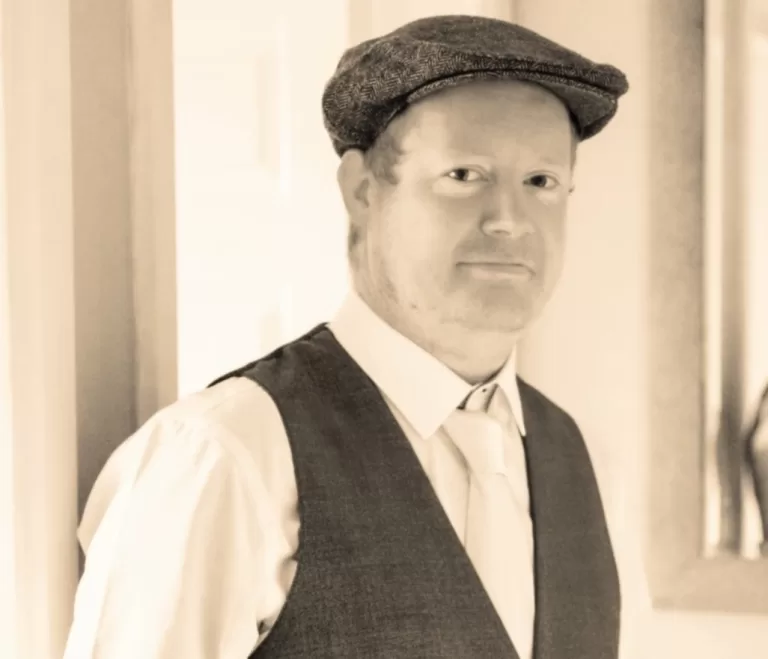

Eoin Shannon feels like the kind of artist you do not so much discover as fall into. The title ‘Every Drunk’s Gotta Story‘ immediately pulled me in, partly because it is a promise and partly because it is a challenge, and believe me, I have a few stories knocking around somewhere, even if I can only remember half of them. That sense of half-recalled chaos, of nights that blur at the edges but leave something behind, sits right at the core of this record.
The album plays out like stepping into a bar you never meant to stay in. One drink becomes two, then suddenly you are caught in someone else’s story, not entirely sure how you got there but not especially keen to leave. Eoin Shannon understands that feeling. More importantly, he knows how to translate it.
Hailing from Cork, Eoin Shannon positions himself firmly in the lineage of classic storytellers. You can hear a little Tom Waits in the grit, a bit of Frank Sinatra in the phrasing, but what really defines him is how little he bends those influences towards modern expectations. There is a stubborn streak here, a refusal to smooth out the rough edges or chase anything that sounds like a passing trend, and that commitment gives the whole thing a quietly old-school charm.
Before this album landed, Shannon had already laid some groundwork with the earlier releases ‘Hello For3ver‘ and ‘Highs & Lows‘ in 2025. Those tracks hinted at where he was heading, but this latest release feels less like a reinvention than a deepening. He does not do it alone either. Larry Magee handles the bulk of the musical composition and production, and his work throughout gives the album a cohesion that never feels rigid, leaving room for imperfections that make the whole thing feel lived in rather than assembled.
The album opens with Sweetheart Candy Lovin, a quietly disarming introduction. Bluesy, spacious, almost casual in how it unfolds, it shows a real confidence in restraint. Nothing is overplayed and nothing is rushed. It feels like Eoin Shannon is happy to let you come to him rather than forcing anything, and that patience suits him.

Then Game Night in Hell shifts the mood. The vocal stays grounded, that same rough-edged delivery, but the arrangement opens up in a way that catches you off guard. Strings arrive almost out of nowhere, wrapped around a haunted piano line that turns the room colder in an instant. It is one of the album’s sharpest turns, a reminder that Shannon knows how to change the temperature without reaching for the obvious lever. The contrast between that gruff delivery and the delicacy of what surrounds it is what makes it stick.
Pull Up a Stool is where things really land. Built around a piano-led structure that leans into that Billy Joel territory, it feels more direct than anything before it. There is genuine vulnerability here, helped massively by the interplay with Kesha Parish’s harmonies. It is the kind of song that does not need to raise its voice to make its point.
Elsewhere, Let’s Get the Hell Out of This Town introduces a subtle gospel influence that shifts the pace without disrupting the flow. It lifts the album just enough, giving it a sense of movement while keeping everything rooted in that same late-night atmosphere. Tracks like Bartender and Pour Me Some Unconditional Love continue to flesh out the record’s world, each one adding another voice and another perspective, none of them coming across as filler. They feel like different corners of the same room, different conversations you might drift in and out of as the night wears on.
Magee’s work keeps everything cohesive without ever feeling overly controlled. Andrei Sorokin’s contribution on Dark November leans into a more haunting palette, while Chanele’s appearance on Night is Dark adds contrast and depth alongside Kesha Parish’s harmonies elsewhere. These collaborations frame Eoin Shannon rather than competing with him, giving the album a broader emotional range without losing its central focus.
What stands out most is that Eoin Shannon does not chase clarity or perfection. He leans into the rough edges instead. That might not land with listeners looking for something clean and immediate, but it is exactly what gives the record its identity and makes it feel slightly out of time in a good way.
‘Every Drunk’s Gotta Story‘ feels experienced rather than constructed, like those nights you only half remember but somehow still carry with you long after. And that is the payoff: Eoin Shannon is not trying to soundtrack the moment so much as capture what lingers after it, the part you carry home with you after closing time.
TRACKS:
